
-
 Technology and Design: Finding the Perfect BalanceInterviews with Leading Italian System Integrators by Chiara Benedettini and Pietro Conte
It All Started With Hi-Fi (or almost)
Giovanni Salvador
ESG
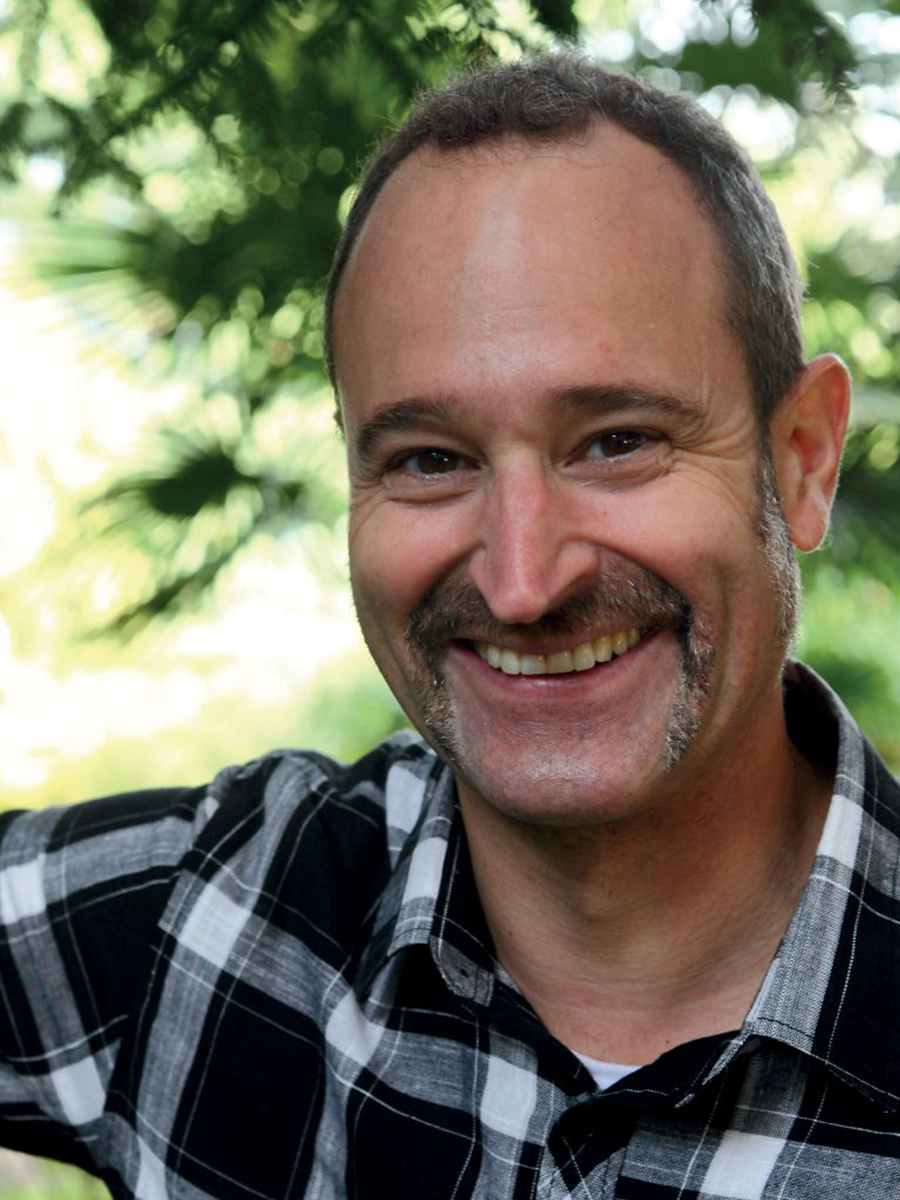
After graduating in Electronic Engineering, Giovanni Salvador, founder of ESG, worked in other fields, yet he always maintained a strong passion for Hi-Fi. A friend who owned an audio and video shop suggested that he take over the business, and in 2007 he decided to start his own company. At first, ESG focused on audio and music, then gradually shifted toward integration, growing step by step. He collaborates with several colleagues, each with their own specializations, and – he says – it’s thanks to them that the work remains stimulating and engaging every day.
Chiara Benedettini - What recent projects best represent your work?
Giovanni Salvador - I immediately think of the conference room at the General Directorate of ASUFC (Central Friuli University Health Authority) in Udine.
It’s a project I consider successful both aesthetically and technically. The space is designed for flexible use: on one hand, it hosts institutional events and official conferences; on the other, it’s used daily for staff meetings and medical training. That’s why we focused on simplicity of use without giving up advanced functions such as video layout management, wireless content sharing, videoconferencing, and the option to integrate simultaneous translation or streaming to and from operating rooms. The room features a 30:9 projection format, chosen to fit architectural features, two front PTZ cameras, one rear camera, and an infrastructure that allows dynamic video management. An automated system controls calls, microphones, and cameras through a single interface.
CB - What does it mean to make technology and design dialogue?
GS - Especially in representative contexts – like auditoriums, executive meeting rooms, or institutional halls – we often work in already furnished spaces where interventions must be delicate. For instance, at the 1930s rectorate of the University of Trieste, we chose a minimally invasive approach. In other projects, collaboration with architects and designers becomes essential, especially when the designer plans an aesthetic outcome but doesn’t always know the technical constraints or device dimensions. That’s where dialogue is crucial, sometimes even leading to custom furniture solutions.
CB - What’s the system integrator’s role in this dynamic?
GS - It’s about finding a common language: understanding the designer’s vision while explaining that some technical choices are non-negotiable. For example, in a 200-seat hall, a single 2-meter screen just won’t be enough – those in the back wouldn’t see a thing. Proportions, distances, brightness – all must be respected. This awareness comes only from ongoing collaboration.
Pietro Conte - I recently had direct experience with this: the designer of a major project planned to dismantle the old seating, dispose of it, and reuse the existing technology – which was still modern and valuable – integrating it into the new chairs to improve the overall system. Unfortunately, the original installation of that technology had been done rather poorly. As manufacturers of the new seating, we asked to coordinate with the project’s technical lead to plan cable routing, microphone placement, and similar details. That coordination never took place, so we set up standard provisions that later turned out to be unsuitable… The project was ultimately successful, but only at the cost of considerable extra time and effort.
GS - If architects, interior designers, and system integrators collaborated from the early stages, not only would issues be avoided, but the integration would also be cleaner and more coherent. That’s when technology and design truly merge.
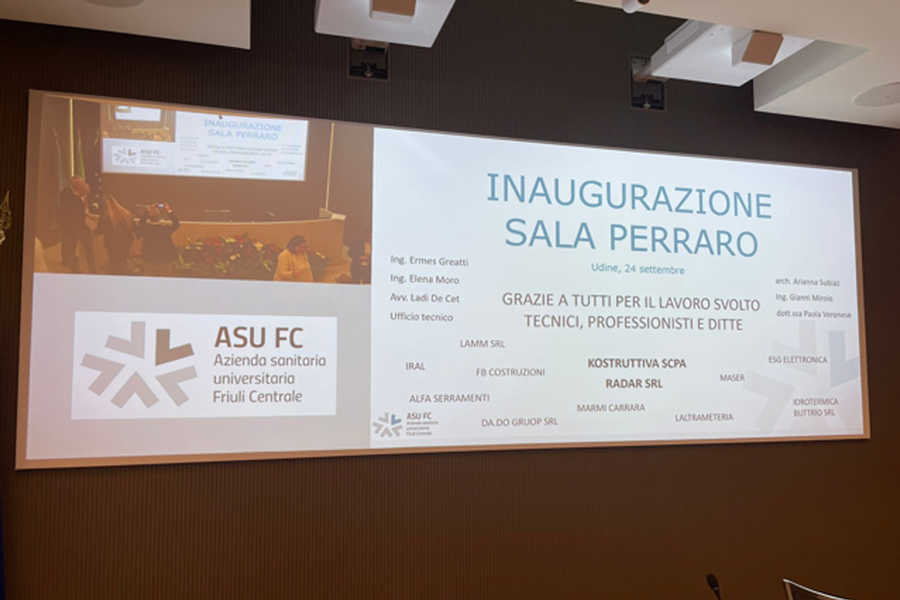
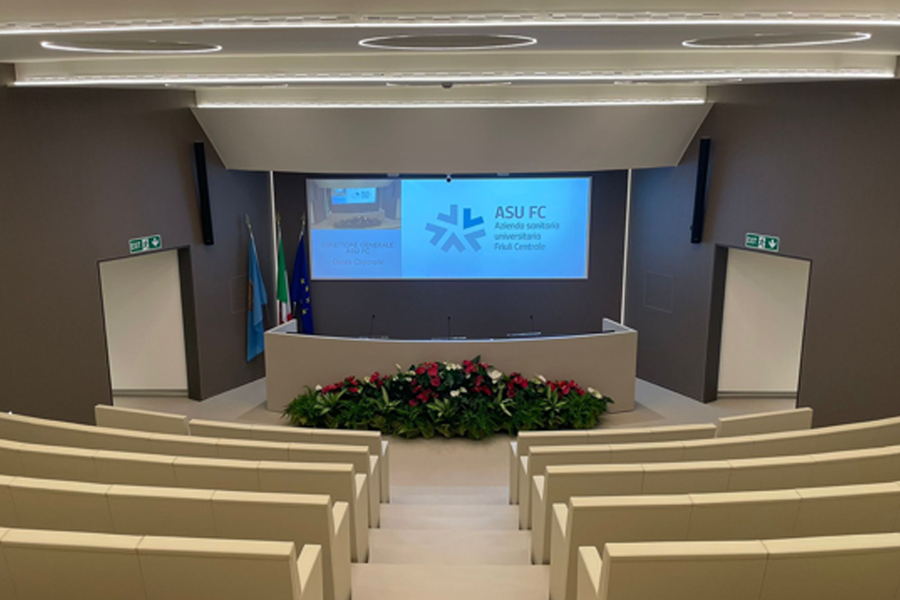
1.-2. The conference room of the General Management of ASUFC (Azienda Sanitaria Universitaria Frulli Centrale).
CB - Ergonomics and user experience in tech spaces: what’s the integrator’s role?
GS - Technology is increasingly pervasive, but its complexity shouldn’t burden the user. Interfaces – graphic or physical – must remain simple and adapted to various users. We spend time with clients defining interface design and logic: it pays off, as users quickly become independent.
PC - And AI could soon transform system design, suggesting optimal solutions or ven enabling voice-based interaction.
GS - I haven’t seen that yet, but it’s only a matter of time.
CB - Are spaces increasingly required to serve multiple purposes?
GS - Yes. For instance, we built a multipurpose hall for cinema, conferences, and talk shows. It features two projection levels: a large screen for films and a smaller ultra-short-throw setup for meetings. Presenters have comfort monitors, and everything is managed via a touch panel with “Conference” or “Cinema” modes for autonomous operation. Of course, multifunctionality has its physical limits – but technology helps bridge them.
PC - Exactly. Multifunctionality is always a compromise: the goal is balance, not specialization.
CB - So maybe the key word is “guiding”… the system integrator often plays a real advisory role, helping the client make informed decisions.
GS - Exactly. Part of our job is also to advise and steer. Sometimes we learn a lot from these experiences too: you think a solution won’t work, the client insists, you implement it… and then you realize they were right. It’s all part of the mutual growth process.