
-
 Technology and Design: Finding the Perfect BalanceInterviews with Leading Italian System Integrators by Chiara Benedettini and Pietro Conte
Design, Beauty, and Technology in the Service of Experience
Alessandro Castellaneta
Acuson
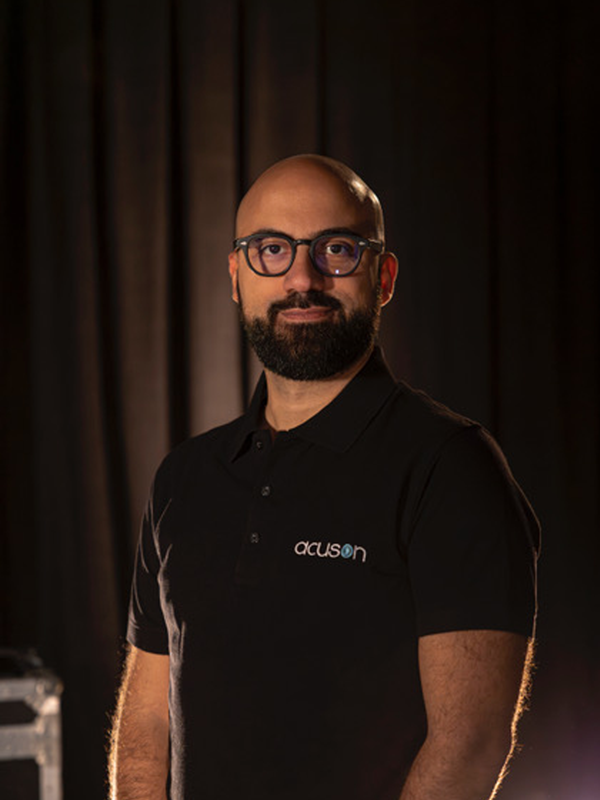
“Acuson was founded in 1978, initially tied to the world of audio and acoustic speakers, then expanded into video and, eventually, large multimedia integration projects. Our company has two souls: one is dedicated to fixed installations, the more traditional side, and the other handles events, which is younger but growing fast.
We have worked for leading clients such as Lavazza, Amazon, Telecom Italia, Juventus, and Banca Mediolanum. Our philosophy is simple: to become a consultant for our clients by building a relationship of trust, interpreting their needs, and translating them into solutions. We don’t tie ourselves to a single vendor: we know and test different technologies and choose each time what best fits the client’s needs, budget, and goals.”
Ergonomics, reliability, and innovation: the three pillars of Acuson’s work.
We meet with Alessandro Castellaneta — who rose from technician to Project Manager — to talk about design as a tool serving user experience, and technology as an enabling element.
Chiara Benedettini - Can you share a couple of projects that best represent your approach?
AC - I’ll mention two. The first is the new training center for Banca d’Asti: we designed all the multimedia rooms and an auditorium equipped with cutting-edge technologies, including a 9-meter-wide LED wall. The challenge was to make a highly complex system easy and accessible: through automation and intuitive graphical interfaces, we ensured a straightforward and user-friendly experience. Today, the center has become a benchmark for the entire city.
And then, of course, Lavazza: a client we’ve partnered with for twenty years, continuously involving us in the technological upgrades of their facilities. In 2024, we completed a technological revamp of 35 meeting rooms, including the boardroom. For an entire year, we studied the best solutions to ensure technological ergonomics and ease of use, with the goal of allowing anyone entering the room to start a meeting without worrying about the technology.
CB - This brings us to the relationship between technology, design, and user experience. How central is it for you?
AC - It’s fundamental, and also a personal passion of mine: for me, design means creating something that serves a need in the best possible way. Of course, there’s also the aesthetic side of design, but for me it only works if it truly supports and improves usability.
Today, technology is incredibly powerful, but it risks becoming a barrier if not designed properly. That’s why we focus on increasing automation within our interfaces, which must be simple, clear, and visually appealing. Users shouldn’t face dozens of buttons, but only what they actually need, presented in a familiar way - like the smartphone they use every day. For us, design isn’t just about aesthetics but about intelligent planning: making things simple, functional, and ergonomic. It’s always a pleasure when architects share this vision, because the best projects emerge from this synergy.
Pietro Conte – I completely agree. Design, when understood as planning, is very close to your technological challenge. I remember the insights offered over ten years ago by architect Favaretto of the Design For All Association, who emphasized the importance of accessible design for everyone - shifting from a disability-oriented approach to an inclusive design perspective. In our field of furniture, we also develop solutions that improve experiences for all: I’m thinking, for example, of our university desks adapted for people with disabilities, which have now become the standard. In technology this process is more evident, but furniture can also play a key role.
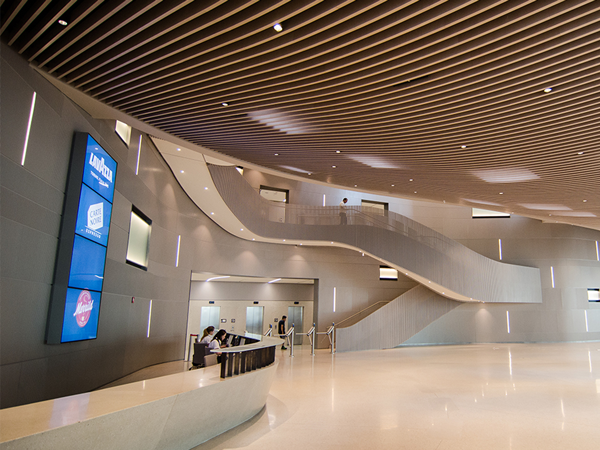
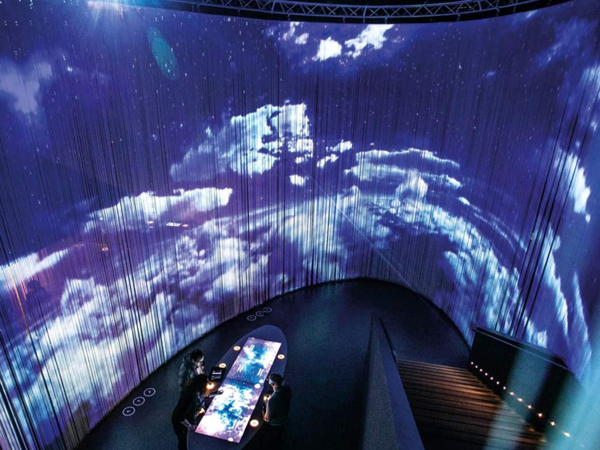
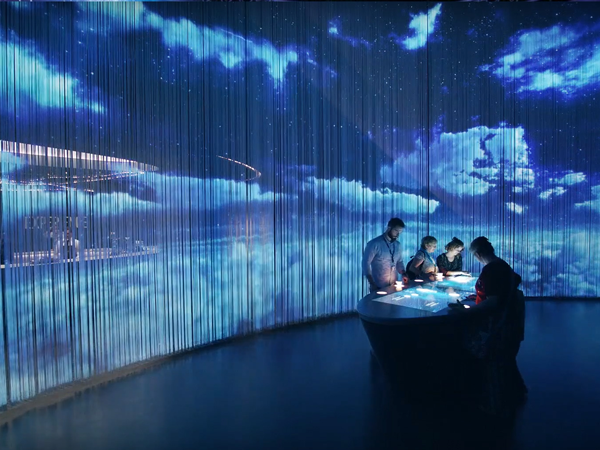
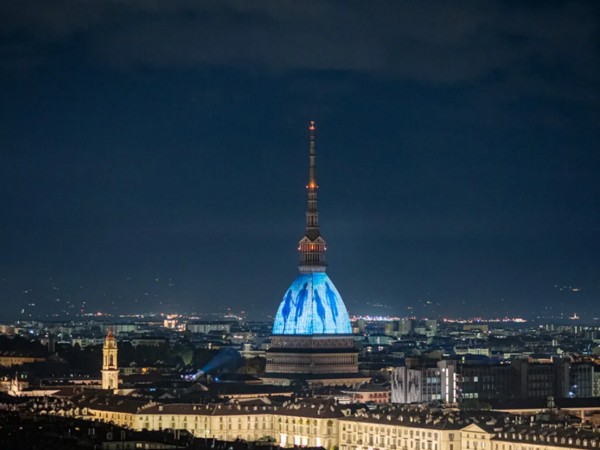
1. Integration at Nuvola Lavazza, Turin. 2.-3. Immersive experience at the Museo Lavazza, Turin. 4. Video mapping on the Mole Antonelliana, Turin.
Let’s move on to another key topic: multifunctionality. How important is it, and how do you approach it?
AC - More and more often, clients ask for multifunctional spaces that can host different types of events, from conventions to meetings. One example is the immersive room we created for Mediolanum: 12 projectors for 360° projections, usable both as part of the museum tour and for internal meetings or events. The challenge is to reconcile very different needs – for example a 300-person convention versus a 30-person meeting - while always ensuring ergonomics and simplicity. Thanks to Acuson’s dual expertise in installations and events, this perspective comes quite naturally to us.
Another case is Lavazza’s “Nuvola”: we suggested investing not in purchasing more devices, but in building a solid, scalable network infrastructure for signal management - because intelligent preparation is itself a form of functional design - along with professional motorized hoists that make the space truly modular. Today, that venue can host conventions, concerts, and even movie sets.
CB - Final question: which technology will lead the future of the industry?
EG - It’s hard to choose just one, but I’d say artificial intelligence is already part of our present and will be even more so in the future. We use it daily, often without realizing it. In our sector, its impact is huge, particularly in terms of automation and simplification.
On the technical side, the biggest breakthrough in recent years has been the shift to AV over IP - the transmission of signals over networks. This change has unlocked enormous possibilities for scalability and integration, and it will continue to drive the industry’s evolution.
read more about Acuson
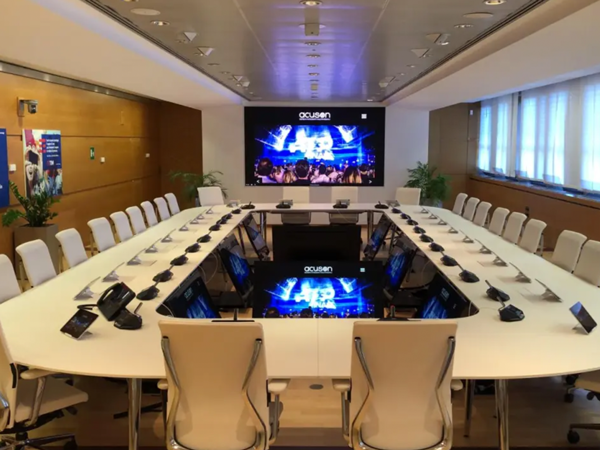
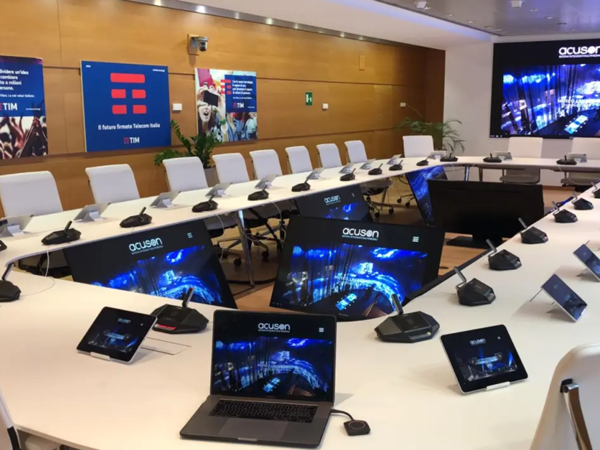
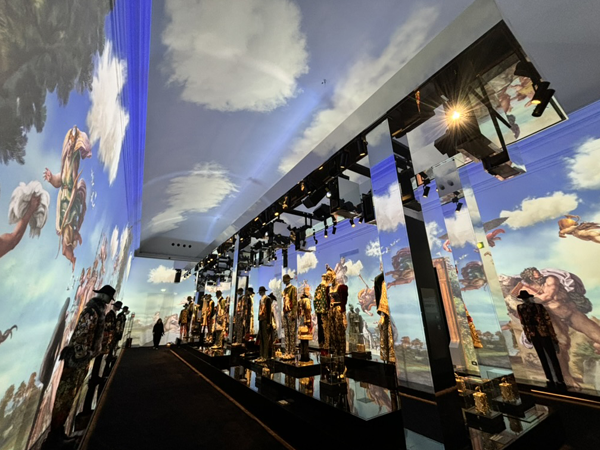
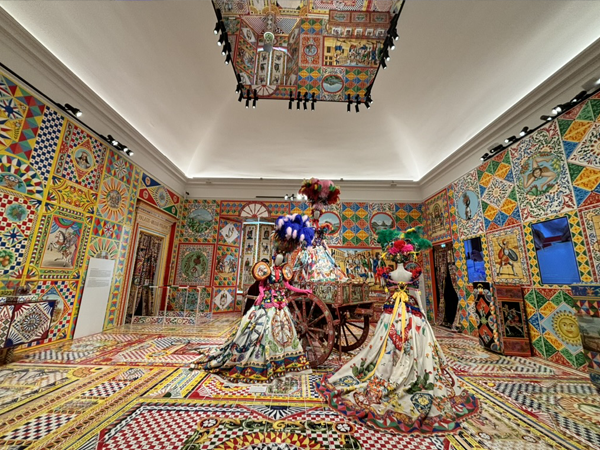
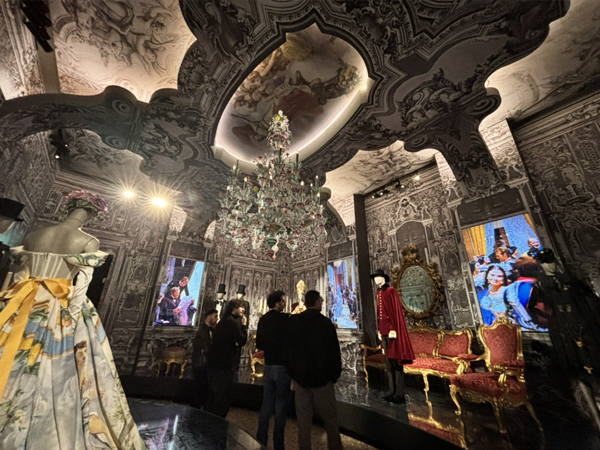
5.-6. The boardroom of TIM offices, Rome. 7.-9. "Dal cuore alle mani": the immersive exhibition on the creative journey of the Dolce&Gabbana Maison, Palazzo delle Esposizioni, Rome, May-August 2025.