
-
 Technology and Design: Finding the Perfect BalanceInterviews with Leading Italian System Integrators by Chiara Benedettini and Pietro Conte
Multifunctionality Is an Organizational Challenge
Andrea Capiluppi
Videoworks
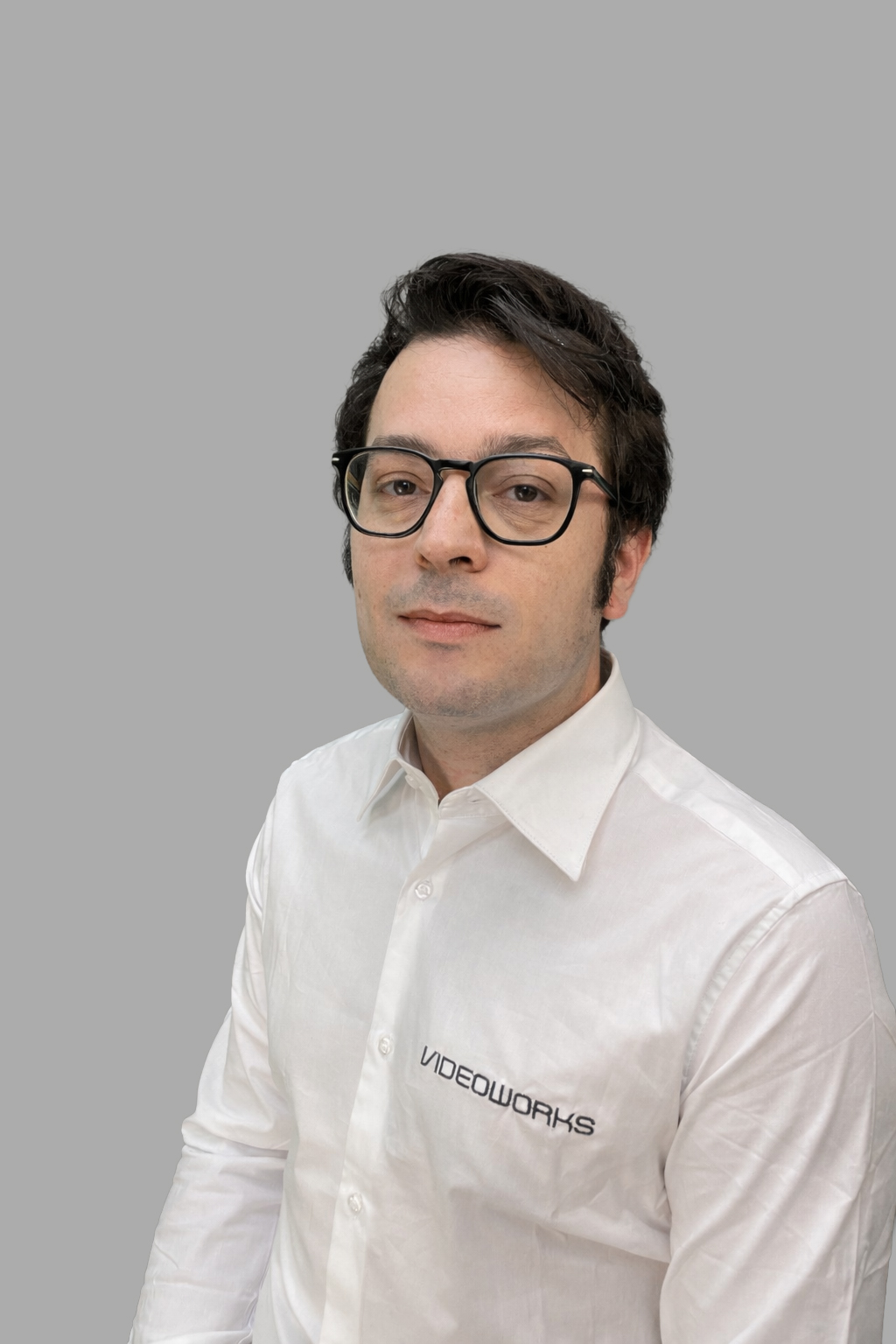
“Videoworks has been active for about thirty years. It started as a supplier and installer of audio systems and today operates on two main fronts: yachting—its original market—and the corporate sector, which began about ten years ago.
The yachting division, based at our historic headquarters in Ancona, has grown steadily thanks to the demand for increasingly innovative and technologically advanced vessels and, especially in recent years, has experienced significant expansion.
I work in Milan, focusing on the corporate branch, primarily in the university and business worlds—meeting rooms, classrooms and auditoriums, conference halls, video studios... We work closely with ITworks, a “sister” software house that develops custom solutions which we then integrate into our projects. Today, we have around 120–125 employees across five offices in Italy and abroad.”
Videoworks has been operating for many years as a system integrator in high-profile yachting, therefore with high levels of customization, but how can the same satisfying and simple user experience be brought to corporate or educational environments? We discussed this with Andrea Capiluppi, System Engineer, who works in the Milan branch dedicated to this sector.
Chiara Benedettini – And your role in the company?
AC - I’m a System Engineer, somewhere between a project manager and a technical sales engineer. I follow projects from start to finish: from the site inspection to the offer development, from team management to final testing. My path is a bit unconventional: I studied modern and contemporary history, so nothing technical on paper. But even at university I was already passionate about music; then I worked as a sound engineer in television, collaborated as an audio technician for events, fashion shows, and fixed installations... In 2007, I started working in system integration, and since 2020 I’ve been with Videoworks. It’s been a hands-on journey that allowed me to build a solid background in audio, video, and lighting—leading me to the role I have today.
CB - Can you tell us about one or two recent projects that best represent your work?
AC - Certainly. The PwC Tower in Milan’s CityLife district is one of them: we implemented around 290 offices equipped with videoconferencing systems, plus several modular rooms adaptable to events, training sessions, and other corporate needs. It was a complex job, made even more challenging since it coincided with the Covid period. Imagine working inside a 27-story skyscraper under strict health protocols and rotation schedules. Despite the difficulties, the project was completed successfully, and the client was fully satisfied.
Then there’s the Milan University, where we initially won a tender for 70 classrooms, later expanded to 90. The complexity wasn’t just about the numbers, but the variety: large rooms, small rooms, historic ones, new ones, located in university buildings, hospitals, and leased spaces. They weren’t 90 identical rooms to replicate in series, but 90 different contexts—almost like having 90 different clients. From an organizational standpoint, it was an enormous challenge. For instance, during our first site visits we discovered that the Levi room was actually a 300-seat cinema, with completely different volumes and acoustics from a typical classroom. We had to redesign everything from scratch.
Pietro Conte – We also work with universities, and sometimes coordinating with other contractors on a public tender is complicated because interventions aren’t synchronized. In fact, the kind of dialogue that inevitably happens during the operational phase would be useful much earlier, in the preparatory stage.
PC - Speaking of dialogue between space and technology, Andrea, how do you see the relationship between technology and design?
AC – Beyond yachting, we now work extensively in the luxury residential sector. Often, the yacht owner wants the same technology installed at home—and that leads us to collaborate closely with many architecture firms. In these contexts, budgets allow for 100% custom solutions aimed at perfectly satisfying the client’s requests.
Naturally, this approach isn’t sustainable in other markets, such as public or institutional ones, where overly customized solutions become expensive and difficult to maintain. That’s why I believe it’s crucial for design, functionality, and technology to converge in products that are already tested and ready to use—tables, retractable surfaces, technological lecterns... This avoids wasting time and prevents both aesthetic and practical issues. It’s a bit like fashion: technology merges with design and becomes part of the product itself. I’m convinced that this will be the inevitable direction for furniture design as well.
PC – We recently experienced a concrete example: a client asked for a modular, dismountable table, but in the end, we received three massive modules, fully wired, and moving them required disconnection and staff intervention. It turned into quite an adventure—definitely not what was envisioned at the start.
AC – Exactly, that’s where design and technology must truly meet. In the private sector, certain customizations are feasible, but in the public one, we need reliable, replicable, and certified products. That’s where design can really make the difference.
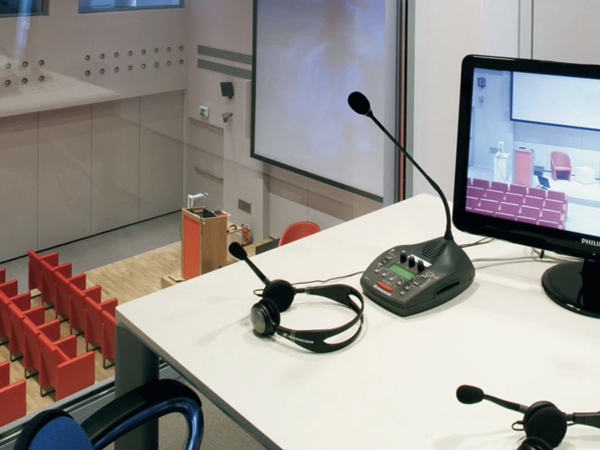
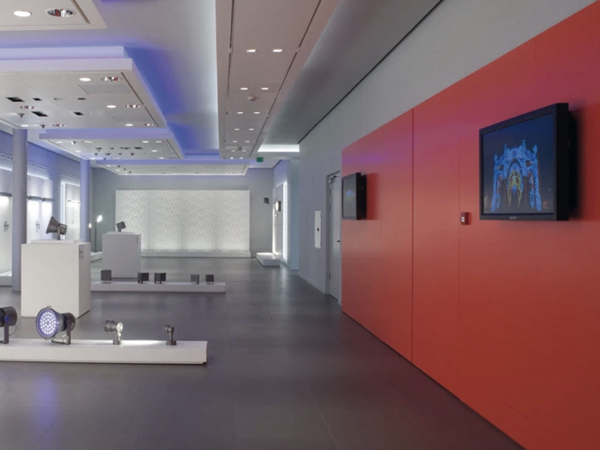
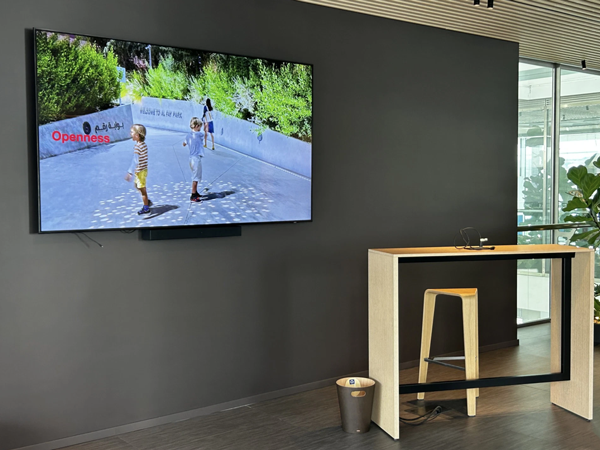
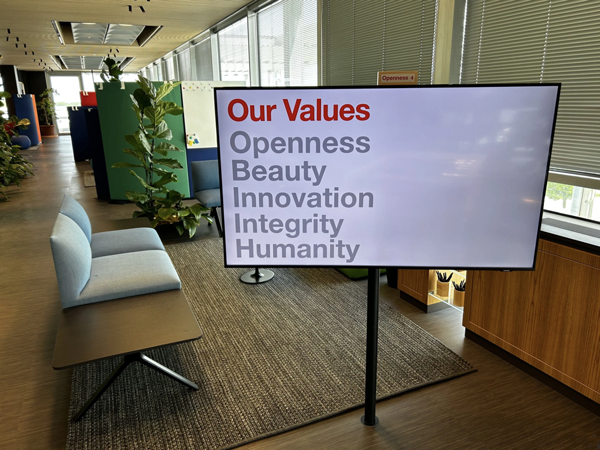
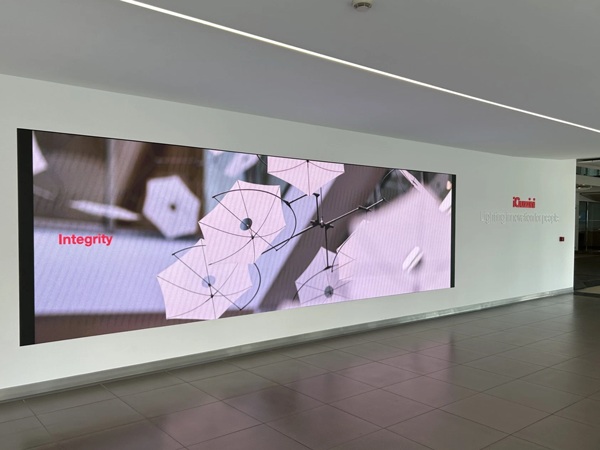
1.-5. Videoworks carried out several projects for the iGuzzini showroom in Recanati (Macerata): the complete renovation of the Boardroom, which also includes a 3D projection system with active stereoscopic glasses; an audio-video system for presentations in the Architects’ Reception Room; and a Digital Signage service across multiple types of sources (displays, LED) for the Lounge Area and the Entrance.
CB - What’s the role of the system integrator in bridging technology and design?
AC - Only through dialogue between those who master the technology and those who handle design and furnishings can truly functional solutions emerge. EssilorLuxottica, for instance, is developing AI-powered glasses with integrated cameras by collaborating with specialized companies…
CB - That brings us to the topic of user experience, which today may be the key to understanding the relationship between technology, installation, and the user...
AC – Exactly. User experience has always been the starting point for design and furniture: architects and furniture makers work from the outset on real client needs. In technology, however, products are often developed first and then offered to clients, who end up with oversized or undersized solutions—not really tailored to their use. It’s an inevitable limitation, since technology comes from mass industrial processes, whereas furniture can take a more customized approach.
This is where the system integrator comes in: owr job is to understand, interpret, simplify, and ultimately adapt technology to the client’s specific needs, making it consistent with the desired user experience.
CB – Nowadays, spaces must be able to change function, and integrated systems play a key role because they create the infrastructure that makes this possible. Would you say that’s also one of the system integrator’s missions?
AC – Absolutely. Before 2020, multifunctionality was a requirement only certain companies or venues could afford, as it demanded special infrastructure—disappearing seats, retractable tables, raised floors... After Covid, we’ve developed new ways of working and living in spaces, and that need has become essential. Today, a room must seamlessly host a meeting, a board session, a lecture, or a conference.
PC – From the design side, though, there’s a challenge: designing spaces that can host such different performances requires compromise. A theatre optimized for spoken drama has very different acoustics from one for cinema or live music. Clients don’t always understand that you can’t achieve perfection in every condition, even with the best technology.
AC – Exactly. Multifunctionality is a coordination challenge. It’s the same logic as with custom products: a pre-tested table or podium works better than something designed from scratch without time or budget. With spaces, it’s even more complex—you need a holistic vision, designers who can coordinate all the different skill sets, and project management that holds it all together. Without that, each party focuses only on their piece—audio, furniture, electrical systems—and the result doesn’t work. That’s why we need solid design companies, with cross-disciplinary expertise, capable of uniting design, technology, and functionality.
CB – Last question. Which technologies will define the coming years?
AC - No doubt: artificial intelligence. We don’t yet know which direction it will take, but we’re already seeing it applied to energy efficiency, access control, space management, and video surveillance. As for generative AI, we’re only at the beginning: in the coming years, we’ll see increasingly customized content capable of interacting directly with the environments they inhabit. Imagine a home that doesn’t just respond to voice commands like Alexa, but reacts to the movements and gestures of its occupants.
It’s something that seemed unthinkable just a few years ago—and in some sectors, it will soon become standard. Today, basic technologies—audio, video, lighting—have already reached very high standards. In the future, the real differentiator will be AI: it won’t just respond to our requests but will generate new needs, radically transforming how people interact with spaces.
And I’d like to reaffirm our willingness to continue collaborating with companies like Aresline: we already do this in yachting, co-developing custom technological solutions with furniture manufacturers, and I’m convinced we can do the same in the corporate world.
read more about Videoworks
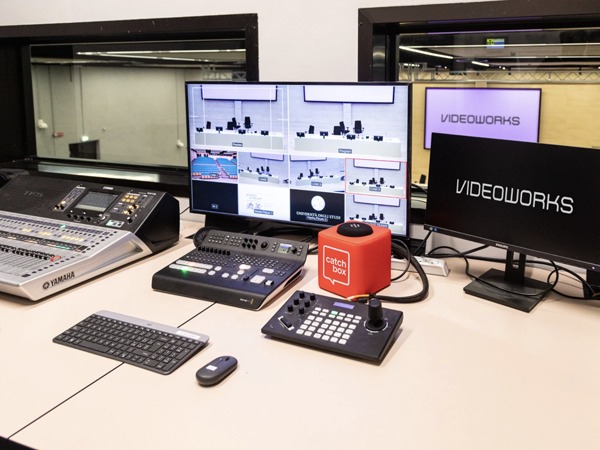
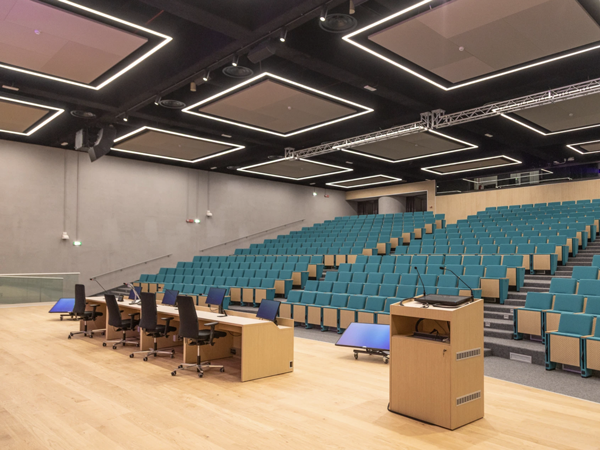
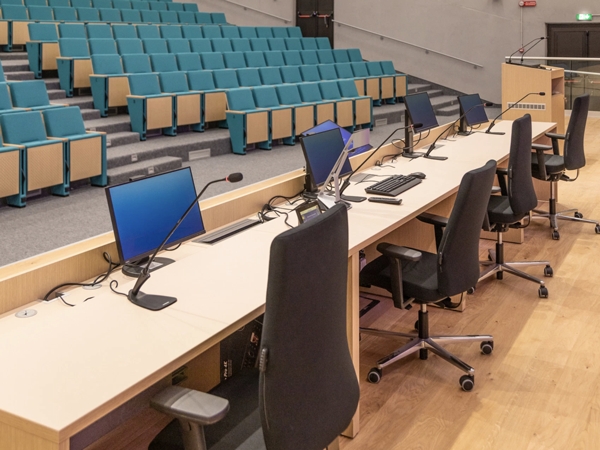
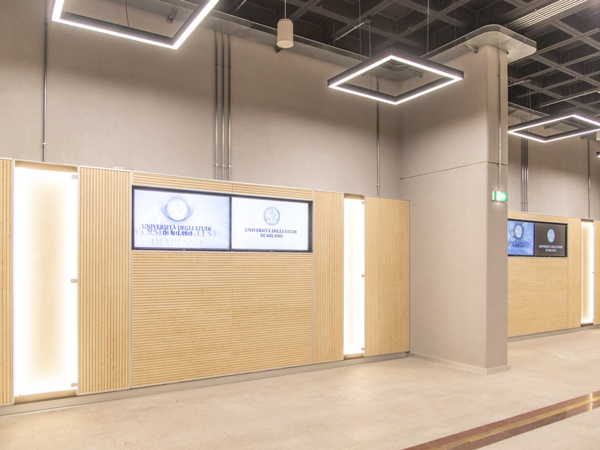
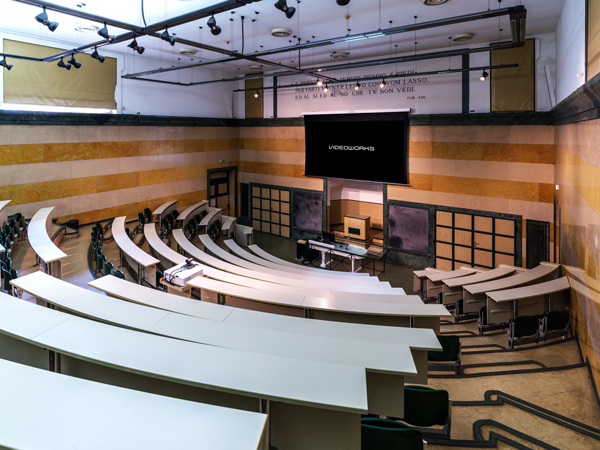
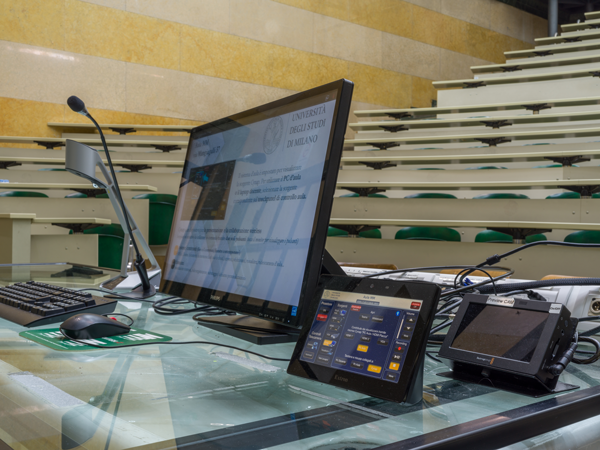
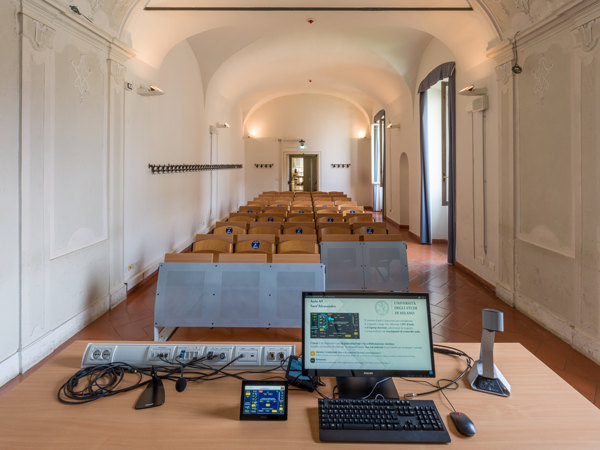
6.-9. Levi Lecture Hall, Università degli Studi di Milano. 10.-12. Some multimedia installations by Videoworks in various lecture halls of the Università degli Studi di Milano (University of Milan).