
-
 Technology and Design: Finding the Perfect BalanceInterviews with Leading Italian System Integrators by Chiara Benedettini and Pietro Conte
User Experience, Flexibility, and Digital Identity:
the Future Is Already in the Conference Room
Mirko Ciarlo and Massimiliano Viglianti
VideoGecom
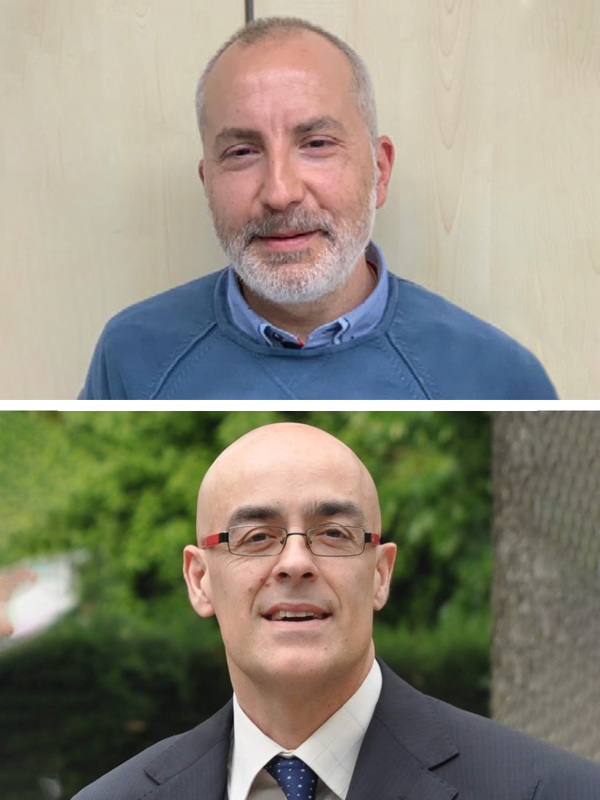
“We were founded in 2005 as video-communication specialists, when it was still a niche technology, with proprietary protocols and complex infrastructures. Today, its use is far more widespread and cross-sectoral, and we have followed that trend. We now design environments in which audiovisual communication is fluid, natural, and accessible. We realized that technology alone is not enough: you also need acoustics, lighting, furnishings, and intelligent integration into a unified project.
We currently have two offices in Rome and Milan and over 30 staff plus an equal number of external collaborators.”
In contemporary work environments, ergonomics and user experience are not measured merely in centimeters or comfort: they are concepts that intertwine design, technology, and new ways of interacting with space. We discussed this with Mirko Ciarlo, Project Office Director, and Massimiliano Viglianti, Inside Sales, at VideoGecom.
Chiara Benedettini - Can you give a concrete example of a recent project that represents your approach?
MC - We recently worked on a boardroom equipped with a control system assisted by generative artificial intelligence. The system recognizes who is speaking, tracks their movements, and generates dynamic and natural camera frames, going far beyond typical automatic presets. To execute such systems, specific technologies, investments, and client awareness are required.
Moreover, it’s essential that architects or designers be willing to integrate them into the environment; when there is no dialogue, misalignments arise that are difficult to remedy during implementation.
CB - Earlier we talked about investments, but it’s important to focus on balancing them with the benefits…
MC - That’s exactly the point: making the user experience more seamless means breaking down technological barriers. If a system is intuitive, it gets used more, and that translates into a real saving of time and resources. In the past, many solutions failed to take hold because they were too complex. Today, thanks to the cloud—now a widely accepted technology—and to a simpler, more distributed network architecture, the level of accessibility has greatly improved.
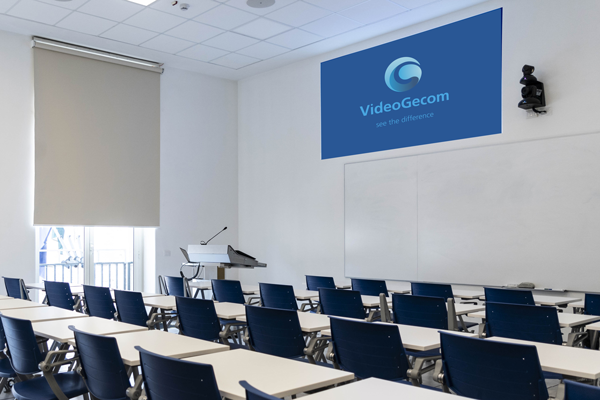
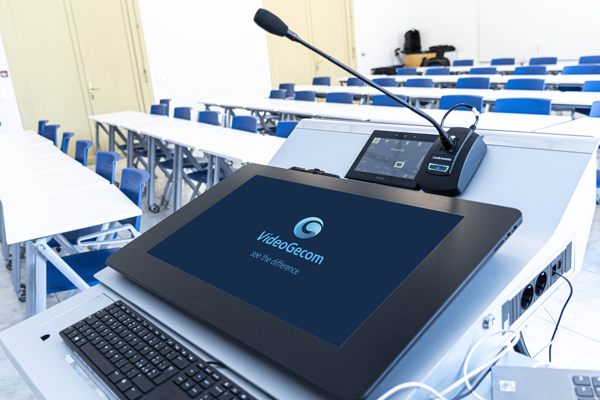
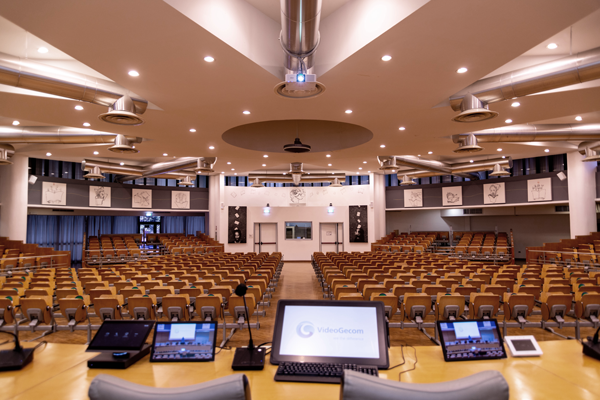
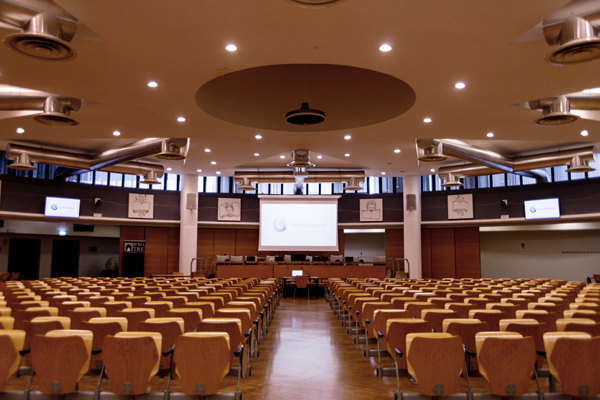
1.-2. Technology installed in the Tincani Hall at LUMSA University in Rome. 3.-4. Technology installed in the Main Hall of the Faculty of Humanities at Roma Tre University.
Pietro Conte - Is the dialogue between technology and design therefore indispensable?
MC - Absolutely. It’s important that technology and design be aligned: technology must be part of the initial design.
Massimiliano Viglianti - As a System Integrator we engage with increasingly diverse parties, and the IT sphere can now be considered a facility. Usage experience now guides requests more than purely technical needs: our interlocutors look for technological solutions already integrated into environments that are beautiful and rewarding.
That’s why we’ve developed proprietary elements like our “Kairos” table designed for executive and situation rooms, and technical totems and consoles that unite function and form for high-impact presentations.
PC - Currently, technology and furnishings often operate on different tracks. What can System Integrators contribute to bringing them together?
MV - Acting as a bridge. Technologies evolve, become more powerful and complex, but can be difficult to use for someone who is not informed and without design mediation between those who conceive the space and those who supply solutions. Our job is precisely to make them converge, proposing languages, procedures, and interfaces built around the needs of the users who will use them.
Trust with clients is also very important, to break down the inevitable barriers of skepticism and be able to propose solutions that are useful for today’s needs but also tomorrow’s.
MC - When collaboration functions well from the start, results show. Conversely, when technology arrives late, it becomes difficult to make it dialog with already‐defined spaces. That’s why we insist so much on the concept of co-design with all professionals involved in the projects: true integration happens there.
PC - How can system integrators support ergonomics and user experience?
MC - Fewer cables, fewer constraints, and ever smaller devices make spaces more livable. But beware: there’s no universal solution. If you step outside functionally specific environments—like a control room or boardroom—the integration between furnishings and technology must be evaluated carefully, because each context has its own rules, aesthetics, and needs. Also, flexible environments are increasingly requested.
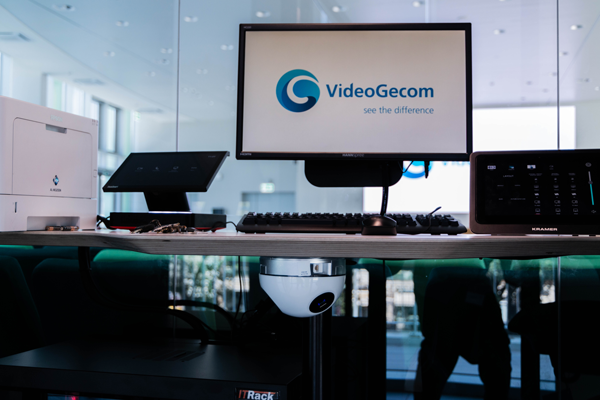
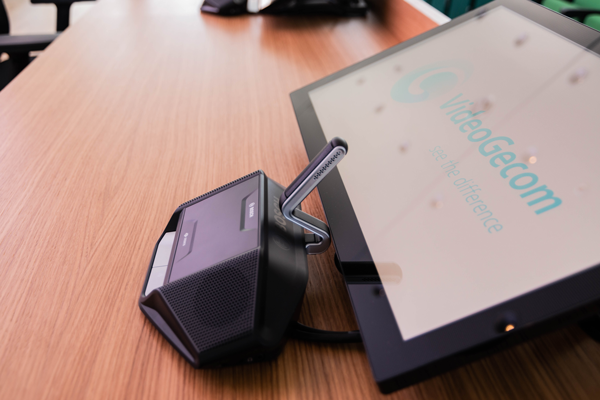
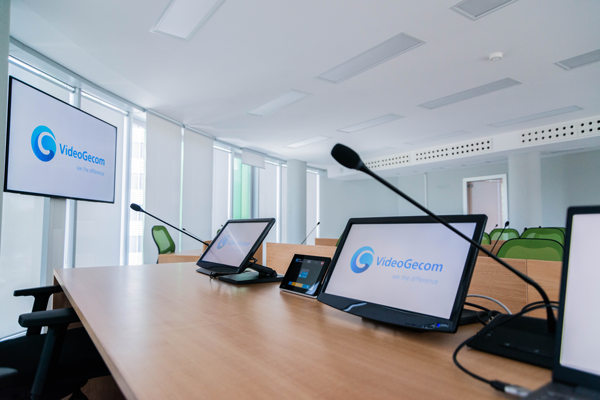
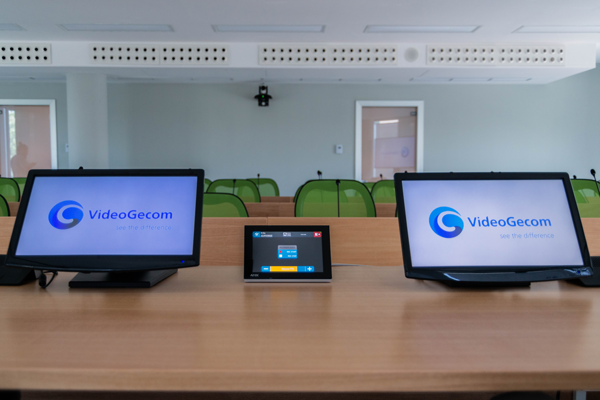
5.-6. Technology installed in the Auditorium of the Rectorate at Roma Tre University. 7.-8. The Board of Directors’ meeting room at the Rectorate of Roma Tre University.
CB - So, multifunctionality?
MV - Multifunctionality is one of the main challenges. We often propose solutions that respond to different uses of the same space: meeting rooms, small brainstorming lounges, hybrid workstations. This multiplies complexity. Companies are rethinking their spaces even from the perspective of cost and real estate optimization, moving from the model “one space = one use” to a more dynamic concept.
User experience also changes the logic of investments: less CapEx (long-term investments), more OpEx (usage experiences for limited periods). Companies want to be able to change configuration and functionality of a space on short notice, without being locked into too rigid a technological asset.
CB - Looking to the future, which technologies will be protagonists in the coming years?
MC - I would say artificial intelligence, understood not just as software, but as a capacity to interpret environmental and sensory data to activate intelligent automations. But also virtual reality—which I personally find fascinating, though in our sector it does not yet have a prime domain, except in very specific contexts like training, medical use, or guided immersive experiences.
MV – I believe we’ll speak more and more about identity management. In video conferencing, for example, we will increasingly be asked to guarantee that the person on the other side is truly who they claim to be. We talk about avatars, collaborative virtual environments, but we lack digital identity certification. Private enterprise platforms with “identity management” systems will be crucial for the future of remote collaboration.
read more about VideoGecom
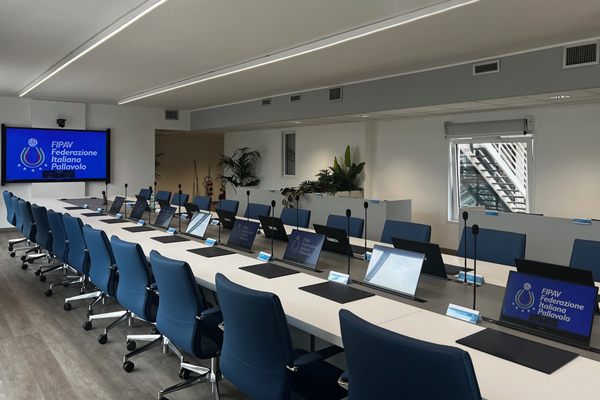
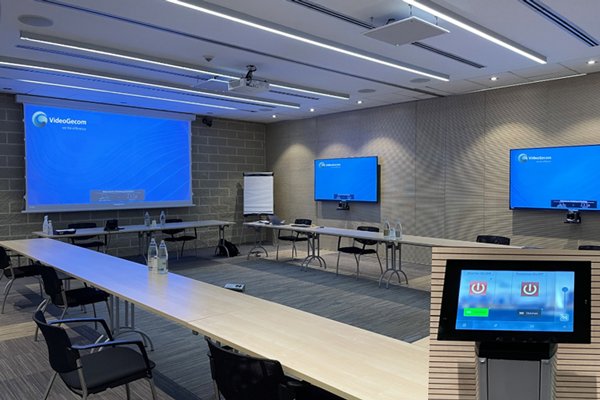
9. Discreet design and technology for the conference room of the Italian Volleyball Federation, Rome. (Photo Credits: FIPAV) 10. Multipurpose hall at the headquarters of SOL Polifunzionale, Rome.
Chiara Benedettini is a journalist and marketing and business development expert in the professional audio-video and systems integration field.
For over 15 years, she was the editor of the trade magazine Connessioni. She combined technical expertise with a caring attitude, helping to build relationships between designers, manufacturers, and people who use integrated technologies for work. Now, as a consultant, she talks to people from different backgrounds to design technology-based experiences and events that make technology easier for people to understand and see how useful it is.
Pietro Conte is the Sales Director for Italy at Aresline.
During his career, he has had a number of leadership roles, including Sales Manager for Italy, Commercial Manager for Italy, and Business Development Manager. This has given him a good understanding of the furniture market and how to sell furniture.