
-
 Technology and Design: The European PerspectiveChiara Benedettini's Interviews with Leading European System Integrators
Designing Together:
The Dialogue Between Consultant and Client
Graeme Massey
JacobMassey AV Specialist
David Aragón
ODI Global
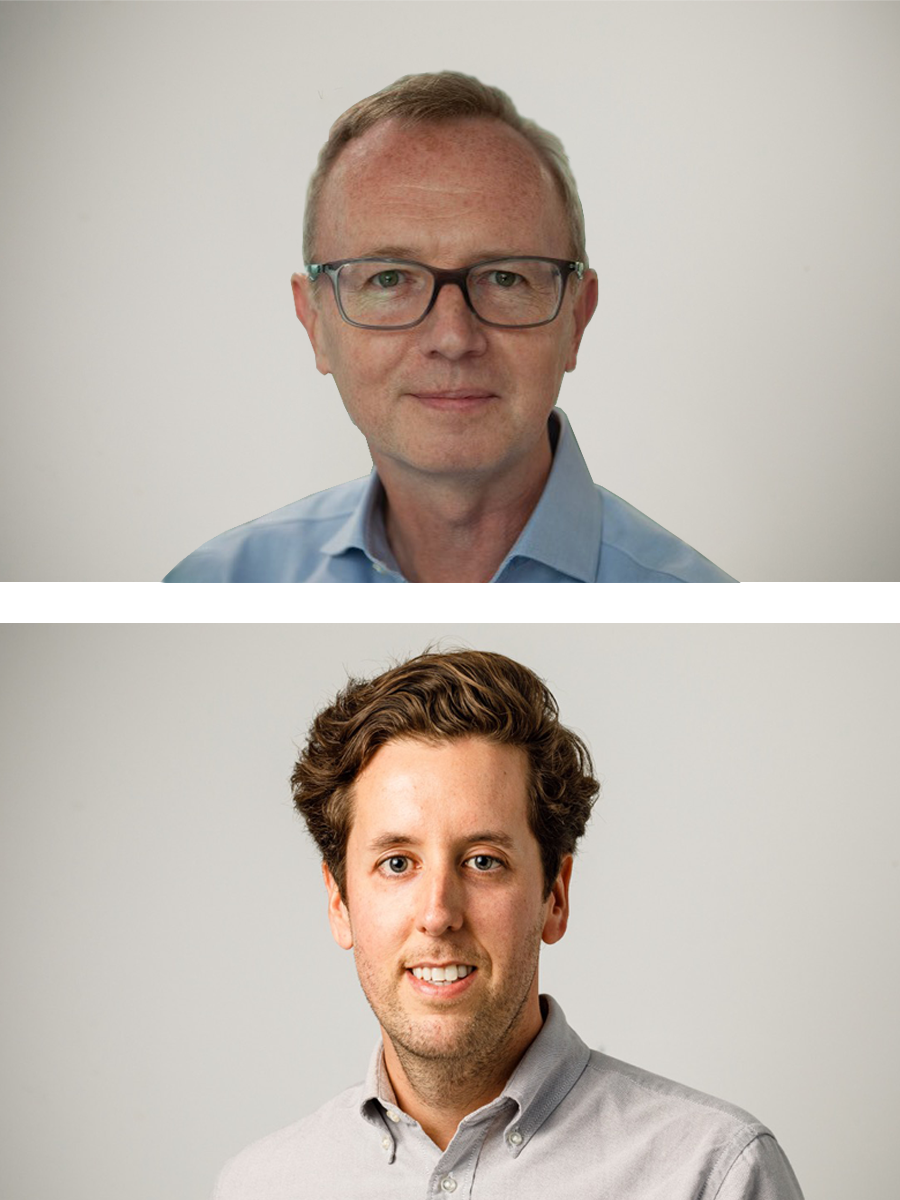
This time, our Technology and Design column features not only the multimedia professional, but also their primary counterpart: the client. A valuable opportunity to explore the relationship between these two perspectives - two distinct yet complementary professional roles - whose direct interaction often leads to the most successful projects.
We met at ISE 2026 Graeme Massey, Managing Director of Jacobs Massey AV Specialists, a UK-based company focused on design and consultancy for multimedia solutions, and David Aragón, Head of Operations at ODI Global, an organization dedicated to social impact: we would like to thank them for giving us the opportunity to delve into a real-world project, the development of ODI Global London headquarters, and to understand why technology and design - when aligned from the very beginning - can truly make a difference.
Chiara Benedettini – Before we begin, I’d like to ask both of you to briefly introduce your professional background.
Graeme Massey – Our company was founded in London in 2003, and today, with over twenty years of experience, we operate internationally, supporting organizations and professionals in building complex technological ecosystems.
David Aragón – ODI Global is an organization with more than 65 years of activity, focused on research, international development, and humanitarian issues. Within our organization, we also manage a highly articulated event space located in a central area: a multifunctional environment hosting public panels, roundtables, video and audio productions, and podcasts. We often welcome high-profile guests, including institutional representatives, policymakers, and civil service personalitie.
CB – This room is at the core of your collaboration, correct?
GM – Exactly. The project originated when ODI Global moved to its new headquarters at 4 Millbank in London - a prestigious location directly opposite the Houses of Parliament, within a building that also hosts ITN, Channel 4, and the BBC. A highly media-oriented context.
We worked with David’s team and the main contractor to transform what was essentially a standard office space into what is now known as the Global Room: a media hub designed for both internal use and external events, presentations, and activities. The project included the installation of a video wall, the creation of a control room, and a podcast studio. Today, for instance, we are at ISE to explore further developments, particularly in terms of lighting and future upgrades.
CB – What were the key requirements for the new space?
DA – It was essential for the room to be extremely flexible - a sort of “blank canvas” that could be reconfigured depending on the need. It can host a panel with a stage, a roundtable, a reception setup, or more informal layouts. Our goal is to evolve toward a more structured and professional environment, also from a visual standpoint: a space capable of delivering comfort and quality for both audience and speakers. At the moment, for example, some seating is quite rigid and not ideal for long events, and the overall aesthetic can be improved.
CB – We are already touching on one of the key themes of our column: multifunctionality.
GM – Exactly. Multifunctionality is the core requirement of this space. We’ve built a solid foundation, but there is still room for improvement, especially in terms of design and perceived quality. A space like this needs to transition seamlessly from a panel discussion to a conference, or even to screening content for external clients. We already have a medium- to long-term plan with ODI Global, aimed at progressively enhancing the space, both technologically and experientially.
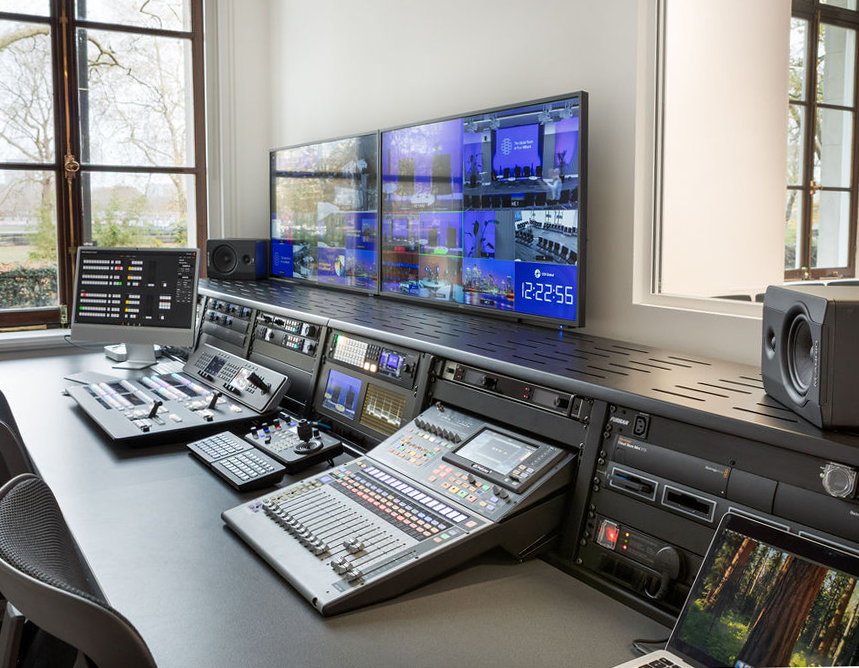
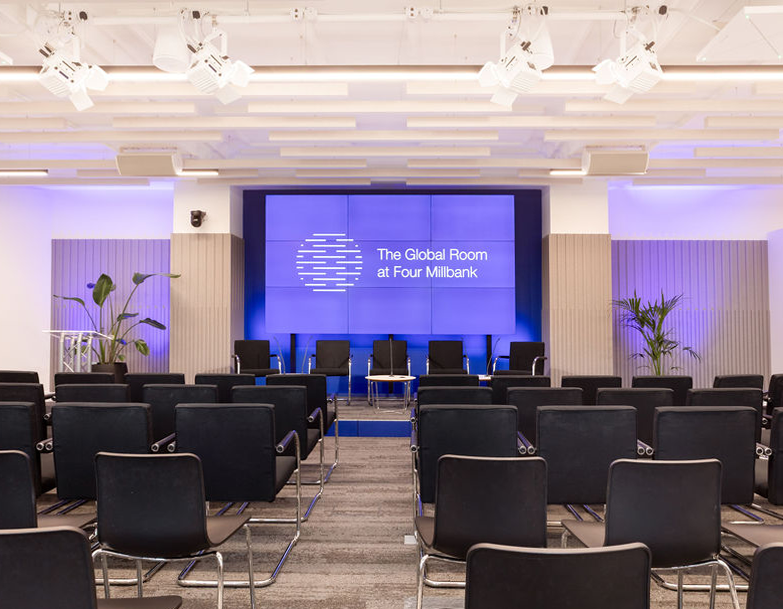
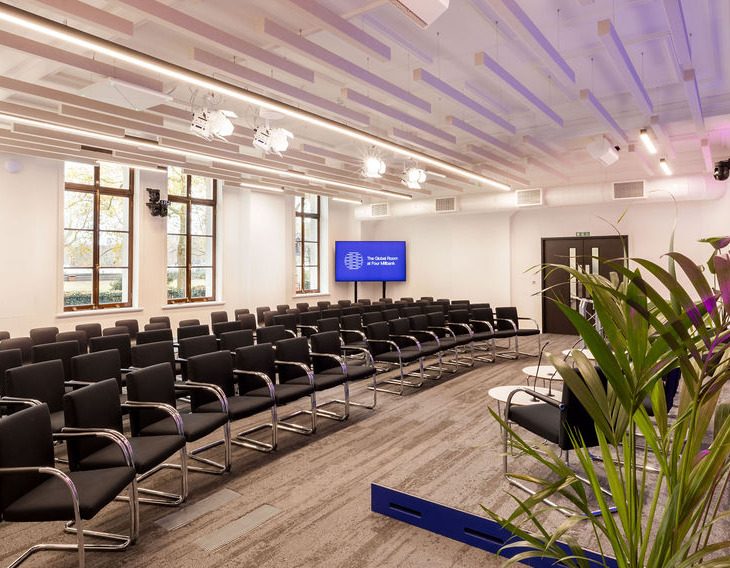
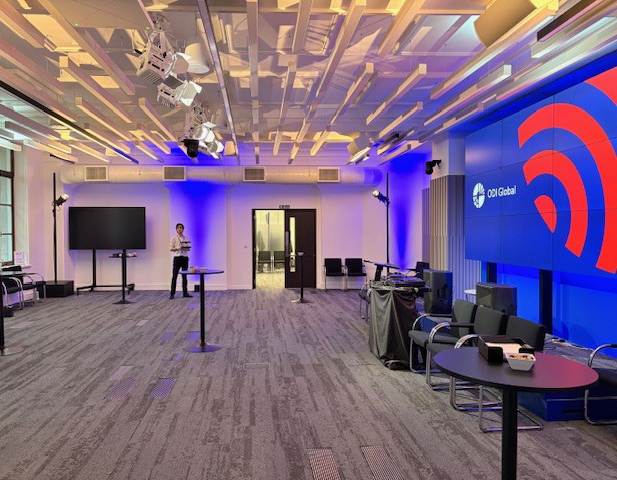
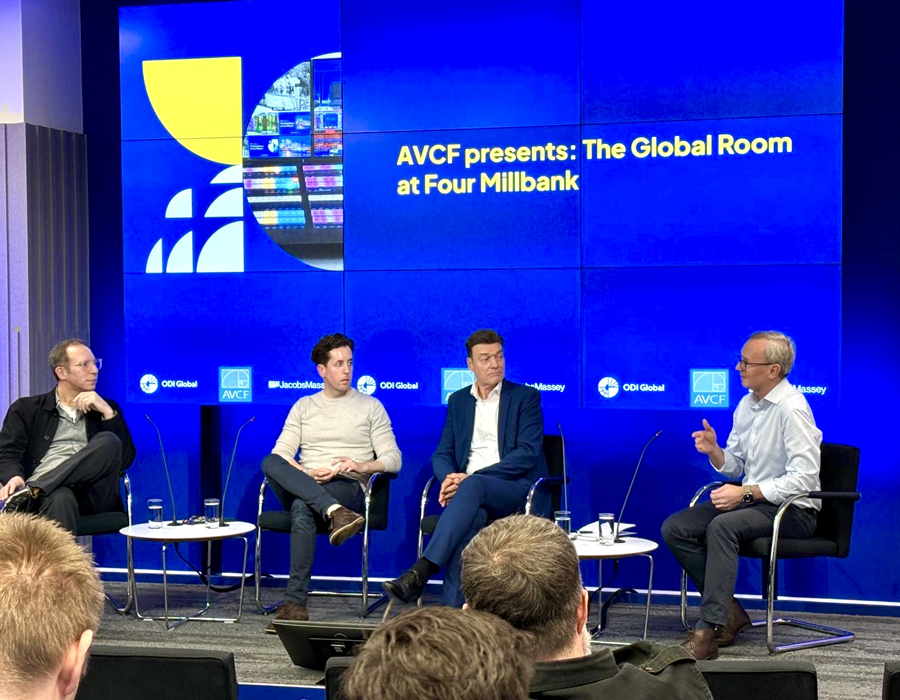
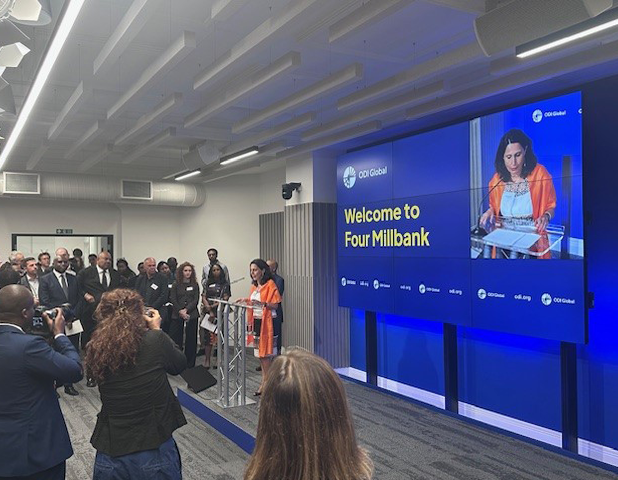
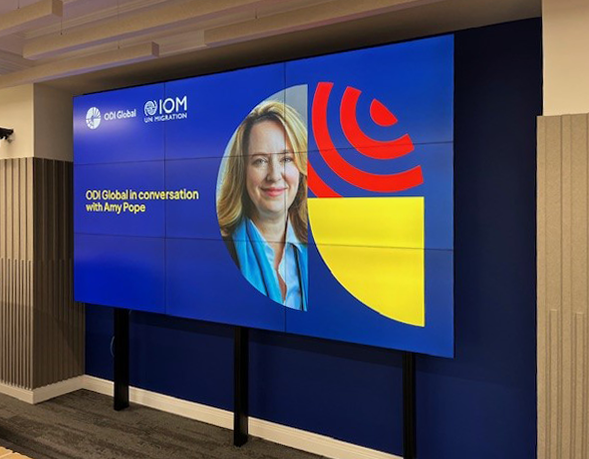
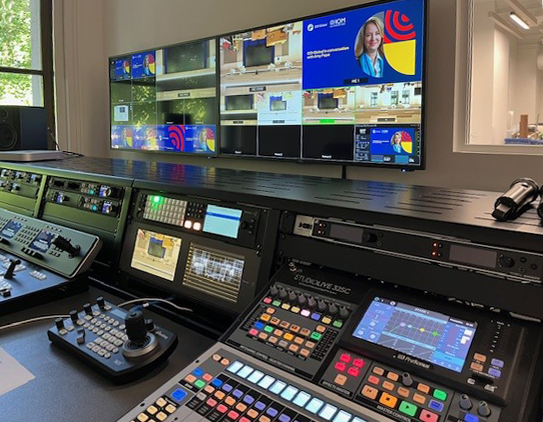
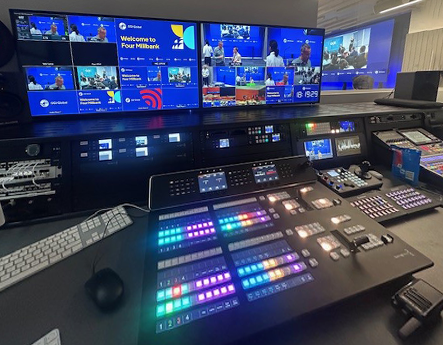
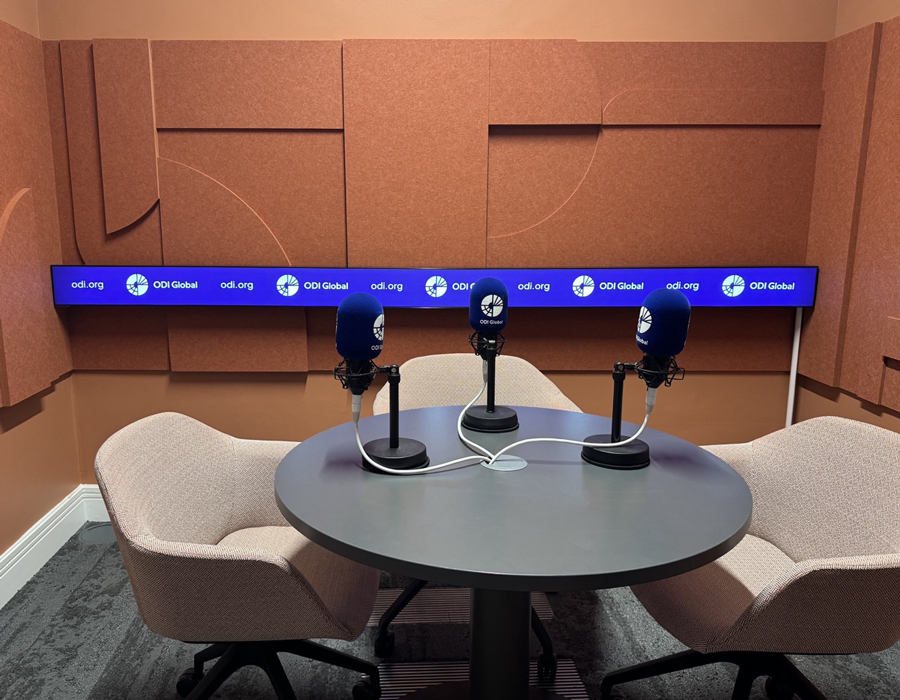
1.-5. Some rooms at ODI Global's Headquarters at 4 Millbank in London.
Nicola Franceschi – Do your clients have specific expectations when it comes to multifunctionality?
GM – In most of the projects we work on today, multifunctionality is an implicit requirement. Spaces must accommodate different uses, often within the same day. It’s now quite rare to design a space for a single function, such as a traditional theatre. When clients look for the best balance between investment and return - especially if they intend to open these spaces to external users - it becomes essential to enable fast and effective reconfiguration. Naturally, this always depends on the level of investment available.
DA – From our perspective, flexibility is even more critical because we operate across multiple projects, often supported by donors and sponsors. It’s important for us to further enhance the value of the space, including through external use, making it available when not in use so it can generate revenue to reinvest in its improvement.
NF – Do you think technology can support multifunctionality? And how can it be made accessible to non-expert users?
GM – Today, the key issue is the integration between technology and the physical environment. For a long time, technology was considered a secondary layer, added at the end of the project. Instead, it should be conceived in direct relation to design. When technology is integrated coherently - without being perceived as an add-on - it creates a true synergy between technical infrastructure and space. That’s when multifunctionality becomes real: not just because the space can change layout, but because technology supports and simplifies these transformations, making them accessible even to non-expert users.
CB – One last question: looking ahead, is there a technology or approach that you think will become increasingly important?
DA – Rather than looking at the future, I’d start from the present. What I find particularly interesting is the level of integration that some solutions already offer. Here at the trade show, for example, you see systems with pre-configured wiring, standardized connections, and modularity that allows spaces to be easily adapted to different contexts. This approach simplifies management significantly. Often, you must purchase furniture or solutions and then adapt them afterward, which can be complex and expensive. It’s much more effective when everything is designed upfront - from connectivity access to integration with audio and speaker systems.
GM – That’s exactly the case with our project: embedding technology into the space.
DA – Also because the space we manage has a high value. For instance, we could better utilize areas that are currently used as transitional spaces or for storage. Optimizing these aspects - also through integrated furniture solutions - means making better use of the environment, increasing its value, and improving the overall user experience.