
-
 Technology and Design: The European PerspectiveChiara Benedettini's Interviews with Leading European System Integrators
User Experience Begins
with a Complete Vision of the Project
Greg Jeffreys
Greg Jeffreys Consulting
Visual Displays
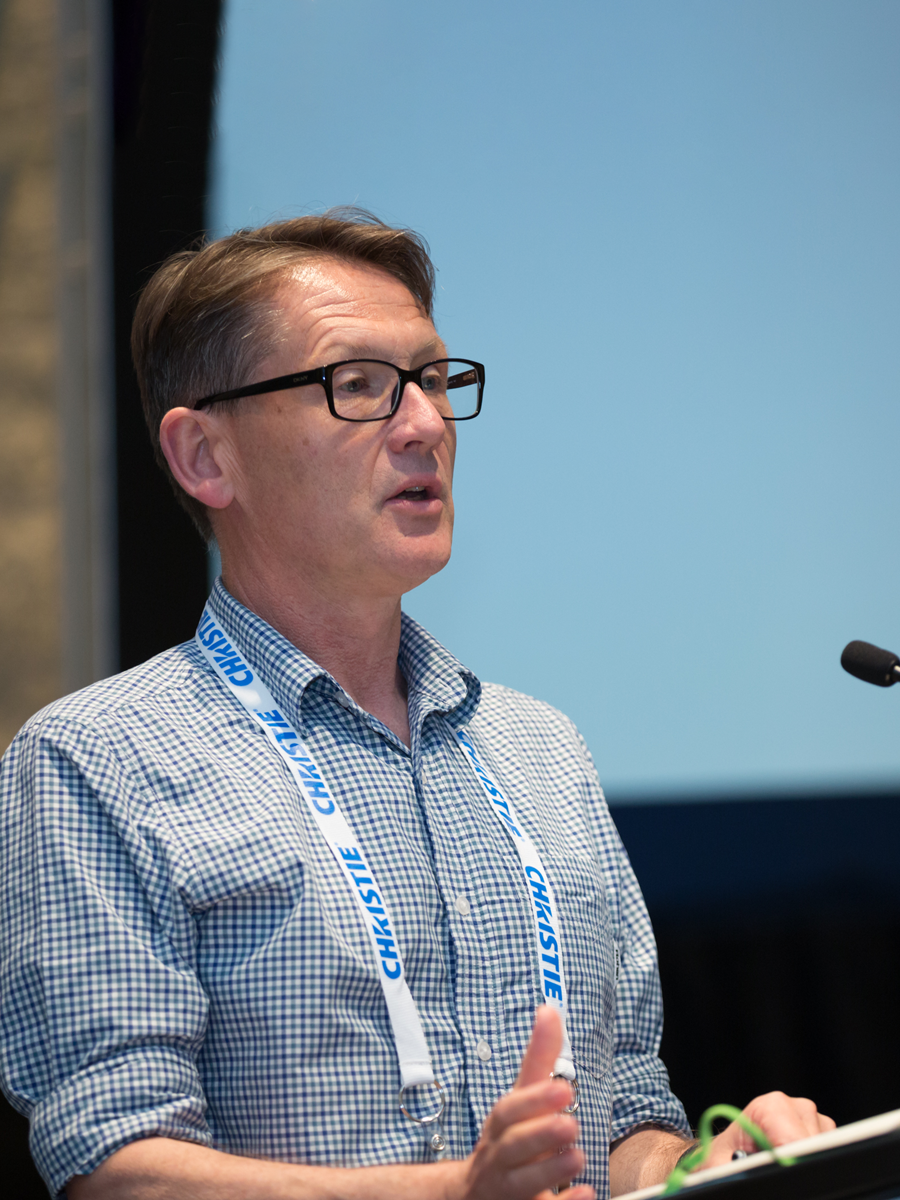
Greg Jeffreys has two professional identities: on one side he runs Greg Jeffreys Consulting, where he focuses on systems consulting and design. On the other, he leads Visual Displays, which creates immersive systems and simulators. This multi-layered experience has also led him to institutional roles - he was an AVIXA board member and was the first non-US Chair. He chaired the AVIXA Steering Committee responsible for Technology Standards - and beyond his home country of England, where he served as a Board Advisor overseeing AVIXA trade shows in Asia. A rich and multifaceted experience we had the chance to discover during last ISE 2026, that has given rise to a distinctive and compelling perspective on the themes of technology and design.
Chiara Benedettini – Can you tell us about a recent project that you consider representative of your approach?
Greg Jeffreys – Last autumn we completed a large digital immersive installation in the atrium of Standard Chartered Bank's new headquarters in India — a surface approximately 10 metres high and 30 metres wide, built using 20 video projectors and numerous video sources. The idea was to transform an architectural space into a narrative surface, capable of hosting dynamic visual content and engaging in dialogue with the surrounding architecture. I always enjoy working in India, above all for the energy and enthusiasm of the people working in this sector. They show a genuine eagerness to learn and improve, and their open-mindedness, combined with a natural ability to find solutions when faced with challenges, makes the work stimulating and the creative environment very dynamic.
CB – What does the dialogue between technology and design mean to you?
GJ – In my experience, they don't always communicate as well as one might hope. It's also one of the reasons I chose to separate my consulting activity from the work related to systems delivery. In consulting, I focus primarily on space design: thinking about the environment, acoustics, lighting, trying to consider these elements in a structured yet holistic way. In the AV sector there is often a tendency to assume that technology can solve everything, and when someone wants to build a conference room, the first thought goes to which equipment to install. In reality, design represents a great opportunity, because it means starting from the space and from the experience of the people who will use it. Today many projects are managed in a standardised way: particularly in large international organisations, similar models tend to be replicated without distinguishing between different functions or between small, medium and large spaces. This is why I believe design is extremely important — yet it is still not given the depth of consideration it deserves.
Stefano Brunori – Technology and furniture are often designed separately. How can this limitation be overcome?
GJ – AV technology is frequently brought into projects too late, at this point it becomes difficult to integrate it with the architecture and the furnishings. This is why I believe the most interesting solutions emerge when AV designers are involved from the very early stages of a project, working at the same table as building owners, architects and designers. In some of the projects I have worked on, we have used frameworks such as WELL V2 Standard, which actively encourage this kind of collaborative approach. It is not yet the most common situation, but I try to work this way whenever possible.
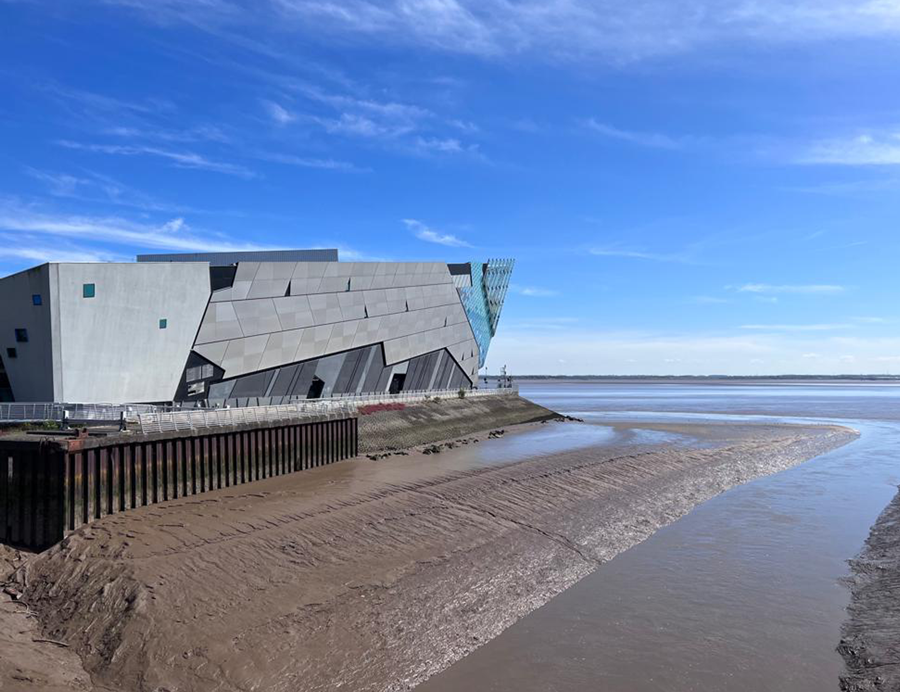
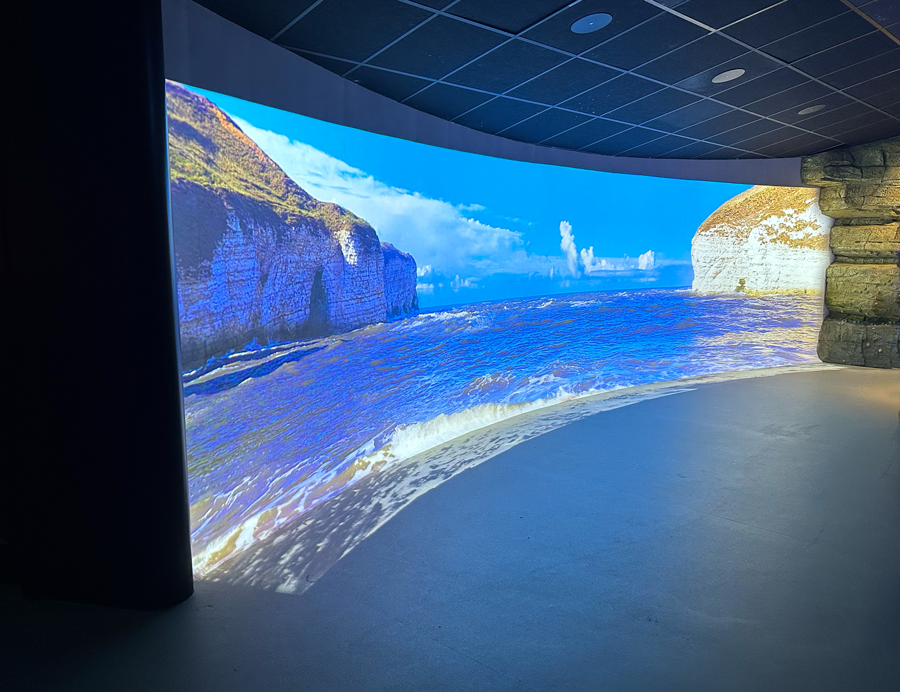
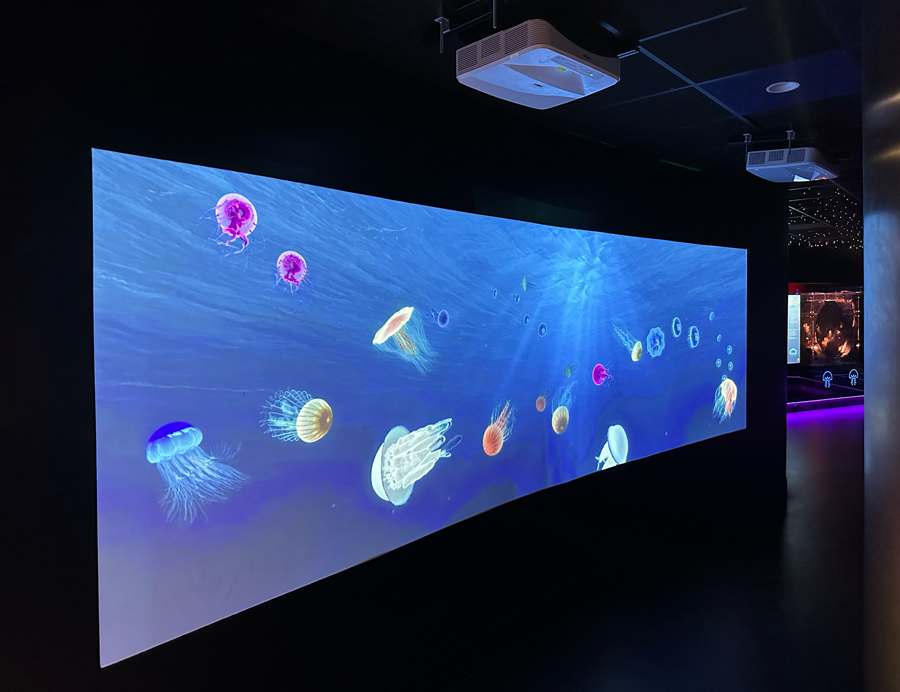
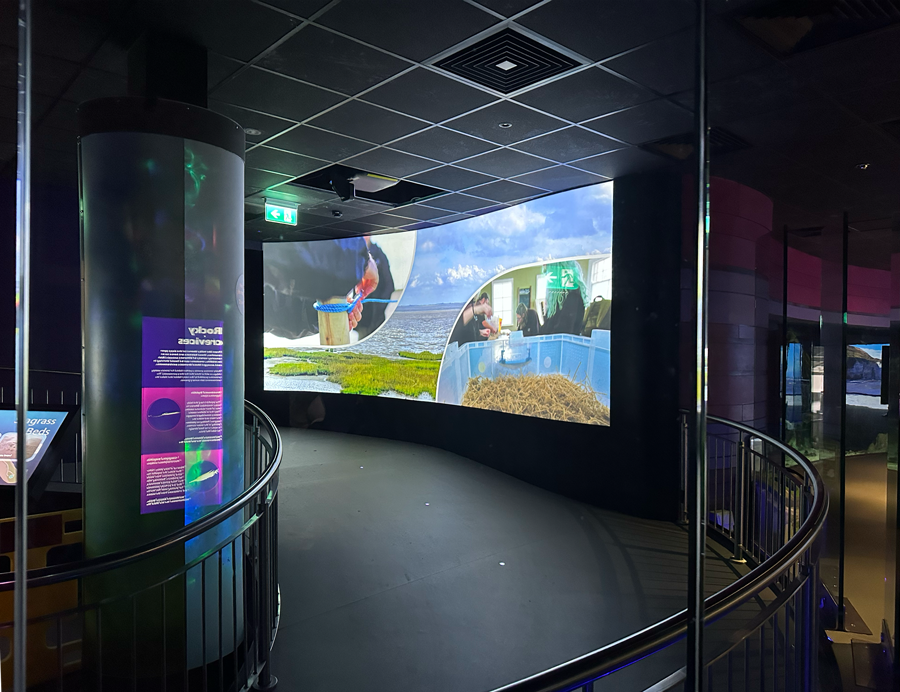
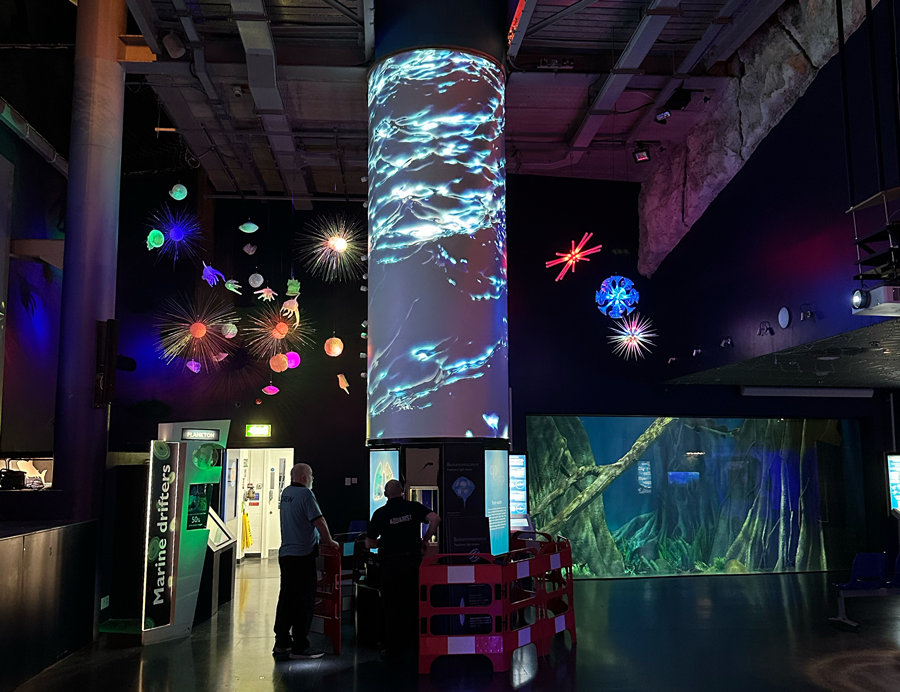
1.-5. The Deep is the UK's largest marine life centre.
Digital Displays installed five immersive systems using GeoBox hardware-based video and image processing devices.
SB – User experience is an increasingly central topic today. What is your view?
GJ – In the AV sector there is a great deal of talk about user experience, but it often ends up being limited to the graphical control interface — the panel or the touchscreen. In reality, user experience design concerns the entire environment: the space, the way people use it, and the interactions that take place within it. This is why it is essential to adopt user-centred and human-centred design principles, speaking directly with users and trying to understand how they live and use spaces. It represents a genuine cultural shift, because it means moving away from a purely technological mindset towards a broader vision. Today, projects are far too often judged solely on price, but the real criterion should be long-term value. In offices, for example, creating environments that encourage people to return to work on-site requires forward-thinking design, with careful attention to the quality of the experience.
CB – Should we therefore find a different term for UX Design?
GJ – If I had to choose a word for 2026, it would be "disambiguation". Because in our sector we often use many terms — consulting, design, immersive, 3D, integration etc — but if you ask ten people what they actually mean, you get ten different answers. The same applies to experience design.
SB – In your experience, is the demand for flexible, multi-purpose spaces also growing?
GJ – The most common form of flexible space comes down to environments that can be converted from a single room into two or three smaller ones. But the concept can go much further. When I was working as a consultant with Google, for example, there were spaces with rows of identical desks, designed to be rapidly reorganised: a team could reconfigure the environment in five or ten minutes to suit a different activity. It's an interesting approach because it challenges many of the traditional models we have used to design spaces until now. Naturally, consultants and system integrators can also play an important role in this process, by introducing technological infrastructures and networks already configured for different usage scenarios, without the need to intervene each time.
CB – We are at ISE 2026, visiting the show, what trends have you noticed in terms of technology and design?
GJ – I find the architecture of systems and the adoption of open standards such as IPMX and the whole topic of AV over IP genuinely interesting. It is an area that opens up many possibilities, particularly for simplifying and making control interfaces and panels more intuitive. I think events like ISE are the perfect opportunity to pause for a moment, observe new possibilities and find inspiration to rethink approaches and solutions.
learn more about Greg Jeffreys Consult
learn more about Visual Displays
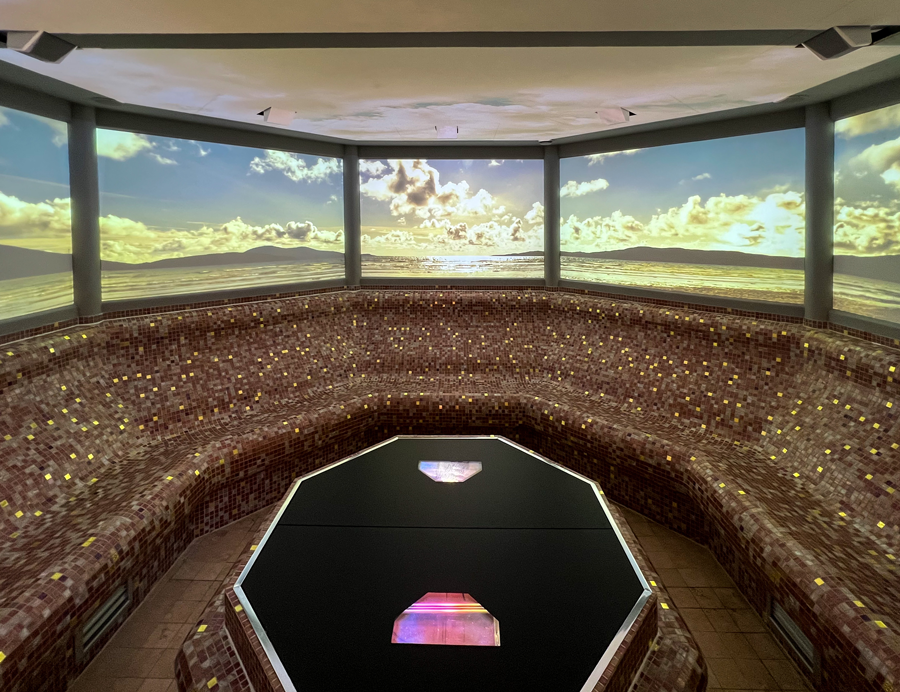
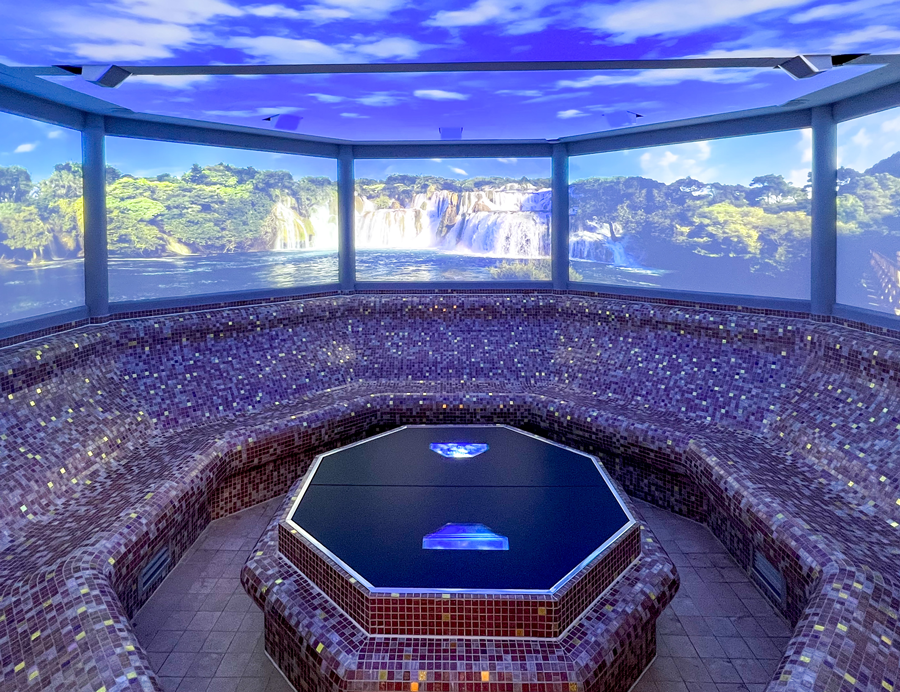
6.-7. At Ragdale Hall, Melton district of Leicestershire, Digital Displays designed and installed a 360 degree
and ceiling projection system with immersive audio in a spa room called Thought Room.